
|

Introduction
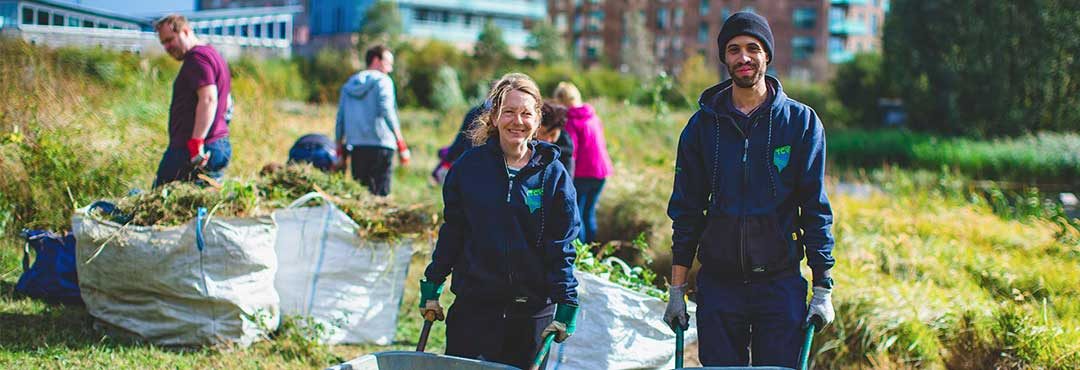
Stave Hill Ecological Park is managed by the Trust for Urban Ecology
as a nature reserve, educational facility, research area and place
of recreation. The Park has been designed and managed to form
a mosaic of grassland, woodland, scrub and wetland habitats which
support a wide variety of wildlife. Visitors can enter from Russia
Dock Woodland or from entrances around Stave Hill. The Park is
open to the public at all times and has a full time warden.
Site
History
Stave Hill Ecological Park is a 5.2 acre nature area located on
the site of Stave Dock in the centre of the former Surrey Commercial
Dock, a few minutes walk from historic Rotherhithe and just over
the river from Canary Wharf. The site was offered to the Trust
in early 1984 by the London Docklands Development Corporation
as a replacement for the William Curtis Ecological Park, Britain's
first urban nature park. Landscaping work began in 1986 and the
park was handed over to the Trust in 1988.
The UK's major
timber port, Surrey Docks operated from the 1860s to the early
1970s when much of the area became derelict. Most of the docks
and timber ponds (large areas of water where timber was kept to
season) were filled in with domestic waste, rubble and subsoil
from all over London. Some of this was re-excavated as the area
was redeveloped and, together with subsoil elsewhere, provided
the material that was landscaped to create the park and the adjacent
Stave Hill viewing point. The extent of the old docks can be seen
on the plaque displayed on the top of Stave Hill, from which you
can see much of London, and this aspect of the area's history
is kept alive in the names of new streets, housing developments
and open spaces: Lavender Pond, Russia Dock Woodland and Canada
Water.
Before the
docks were built, the area was mainly pastureland, and before
that it was a wilderness of water, marshes, reedbeds, Alder, Polar
and Willow carrs inhabited mainly by birds, insects and a few
hardy wildfowlers and fishermen.
Stave Hill
Ecological Park's mosaic of habitats have been created from scratch
by sowing and planting the poor soil. In some places it has bee
improved or altered by the addition of sand, spent mushroom compost
and a variety of mulches. The Park is intensively managed to conserve
the wide variety of wildlife that colonised the area during the
years the docks lay derelict and provide a haven for some of the
species that loved here before humans so changed the land
Contact
details, access and directions
Stave
Hill Map
Volunteering
at Stave Hill
|